Learn the key differences between refrigerated and desiccant air dryers. Discover which type suits your needs based on air quality, energy efficiency, and system requirements.
When it comes to choosing the right air dryer for your compressed air system, it often boils down to two popular options: refrigerated air dryers and desiccant air dryers. Both offer unique benefits, but which one is the best for your application?
In this guide, we’ll break down the differences between these two types of dryers, comparing key factors such as energy consumption, air quality, and application suitability.
1. How Refrigerated Air Dryers Work
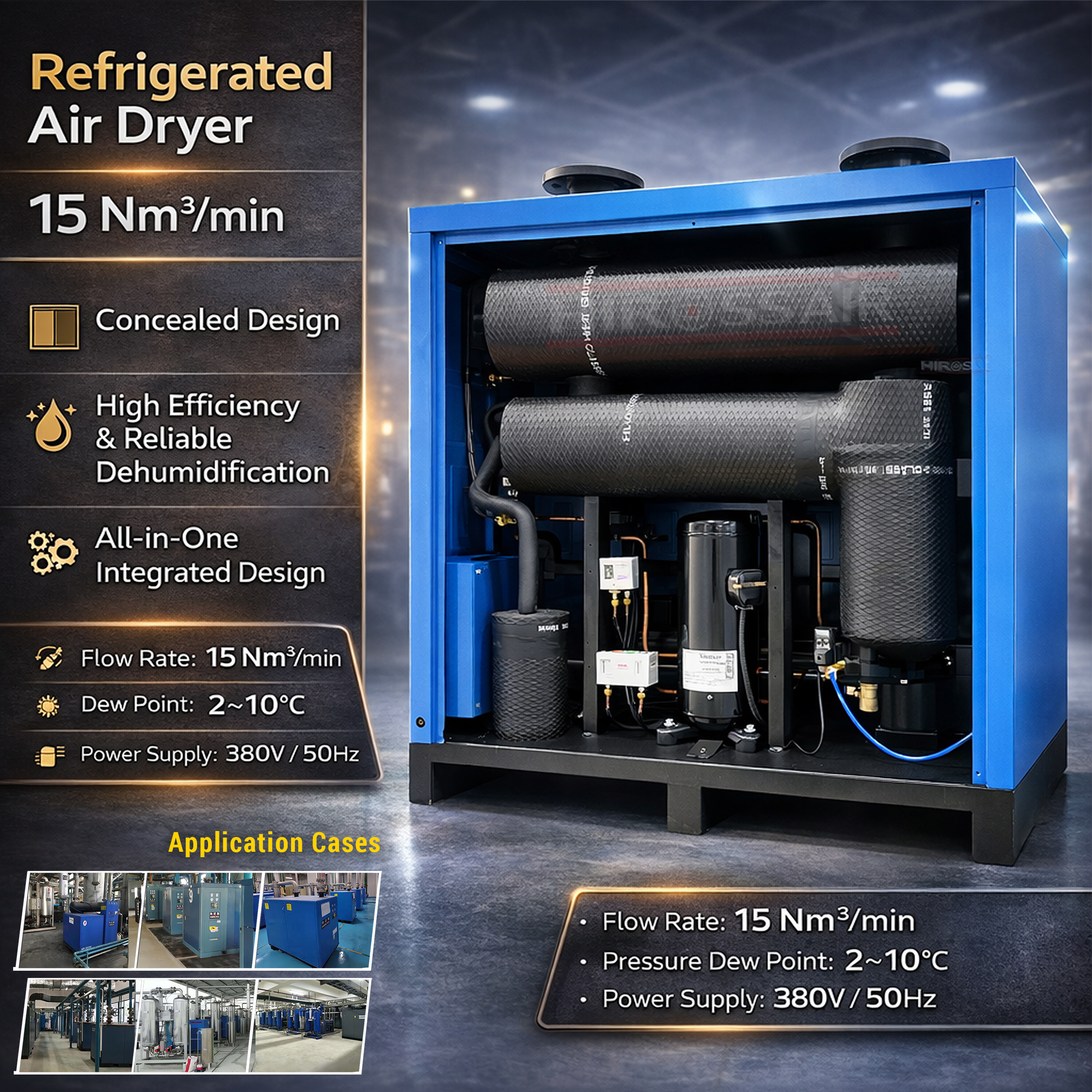
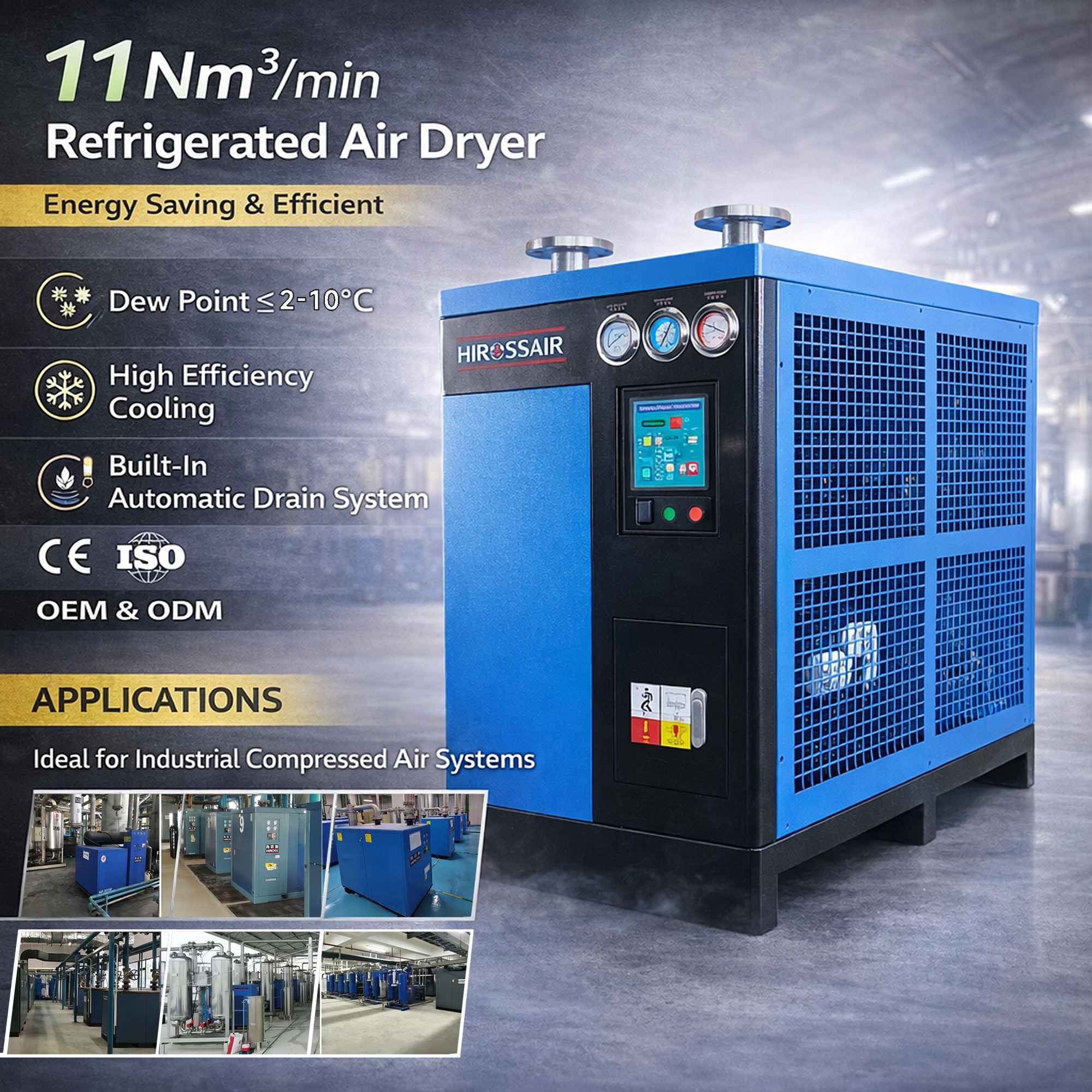
Refrigerated air dryers use a cooling process to reduce the temperature of compressed air, causing moisture in the air to condense and be removed. The basic process involves:
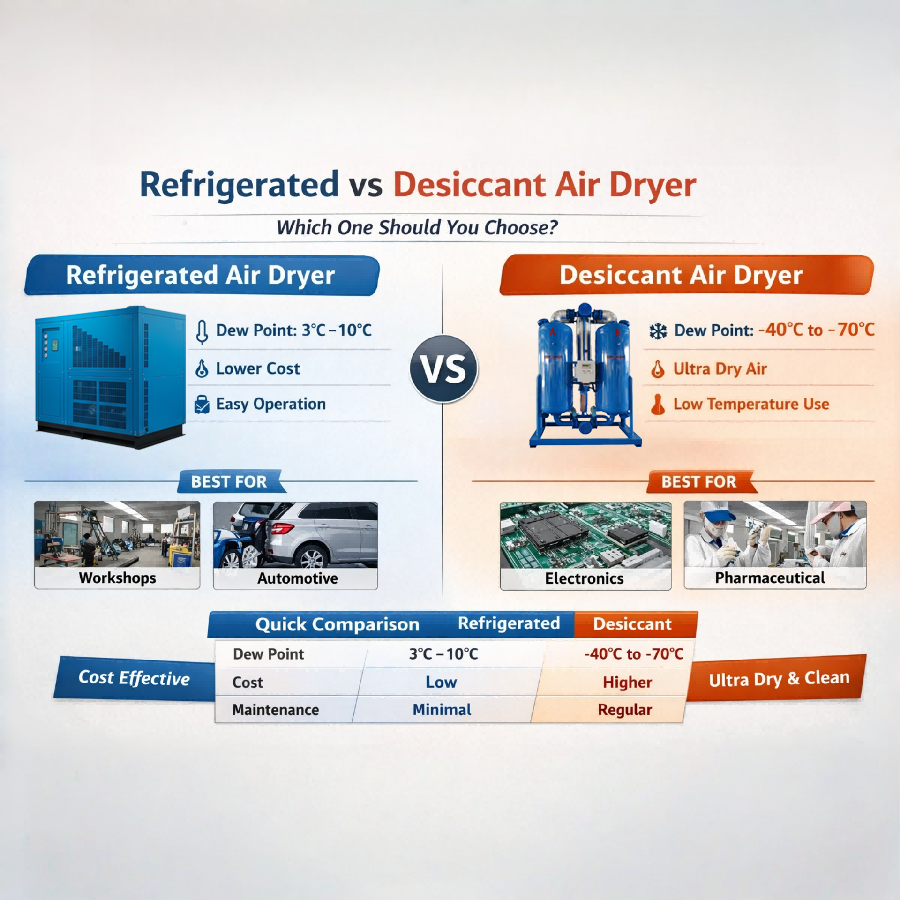
Cooling the air to around 3°C to 10°C
Condensing the water vapor
Expelling the moisture via a drain valve
Advantages of Refrigerated Air Dryers:
Lower initial cost: Refrigerated dryers are generally cheaper to purchase and install compared to desiccant dryers.
Simplicity: These dryers are straightforward in design and easy to maintain.
Ideal for general industrial applications: Perfect for applications where air quality does not require a very low dew point.
Limitations:
Dew point not as low: Typically, the dew point for refrigerated dryers ranges from 3°C to 10°C, which is sufficient for many industries but not suitable for highly sensitive processes.
Energy consumption: While they are efficient, they can consume a significant amount of energy, especially in hotter climates or continuous operation.
2. How Desiccant Air Dryers Work
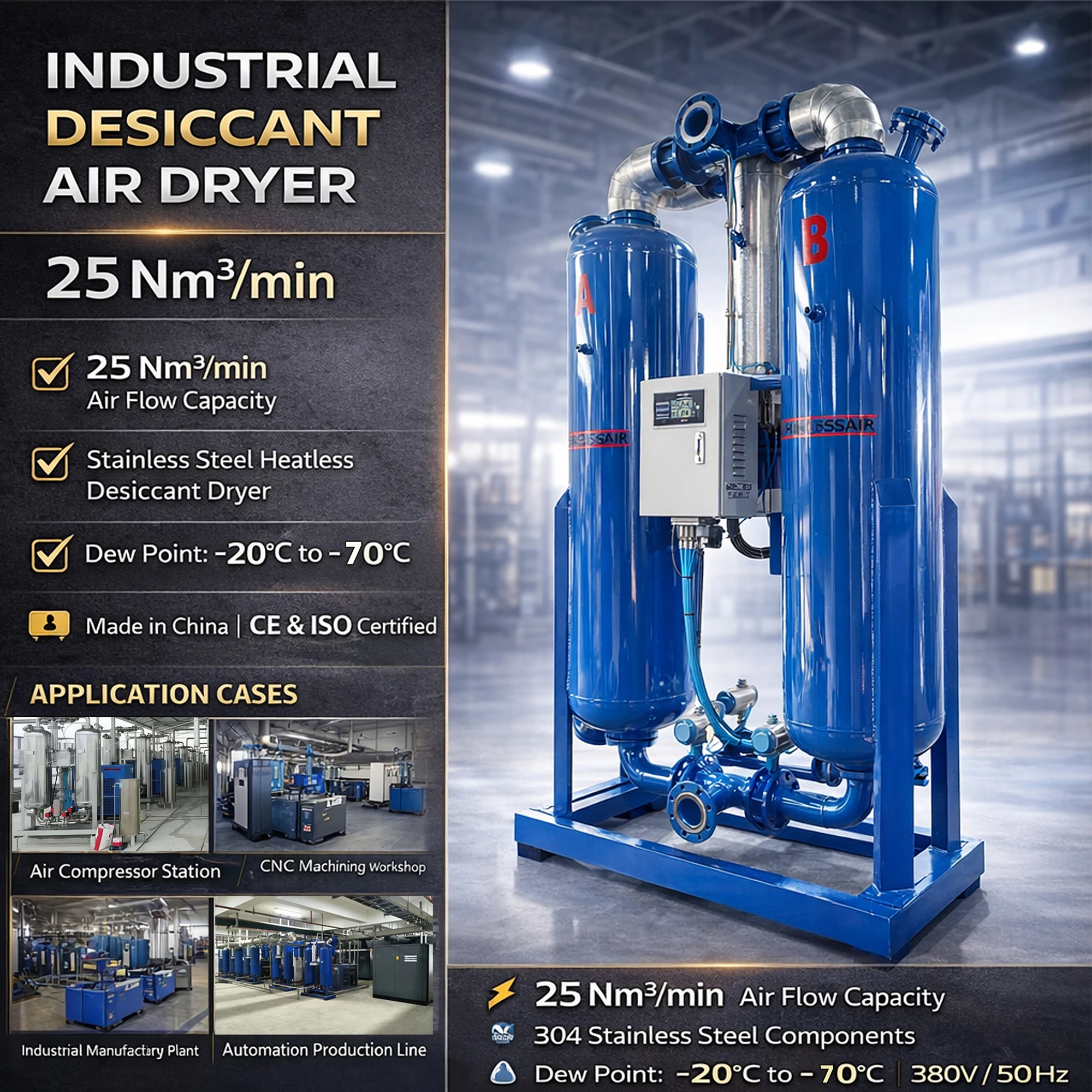
Desiccant air dryers, on the other hand, use adsorption technology to remove moisture from the air. The desiccant material (such as silica gel) adsorbs water vapor, ensuring ultra-dry air.
Advantages of Desiccant Air Dryers:
Low dew points: Desiccant dryers can achieve much lower dew points, often as low as -40°C to -70°C. This makes them ideal for industries requiring very dry air, such as pharmaceuticals, electronics, and food processing.
Energy recovery options: Some desiccant dryers are designed to recover energy during the regeneration cycle, improving overall efficiency.
Better for critical processes: Applications that need extremely dry air will benefit from desiccant dryers.
Limitations:
Higher initial cost: Desiccant dryers are more expensive to purchase and install than refrigerated dryers.
More complex maintenance: The desiccant material needs to be replaced periodically, and the regeneration process requires more energy.
Energy consumption: While more efficient than they once were, desiccant dryers generally consume more energy than refrigerated dryers.
3. Key Factors to Consider When Choosing Between Refrigerated and Desiccant Air Dryers
1. Dew Point Requirements
Refrigerated dryers are best when a dew point of 3°C to 10°C is sufficient.
Desiccant dryers are ideal when you need dew points of -40°C to -70°C, perfect for applications where moisture can cause significant damage or performance issues.
2. Energy Efficiency
Refrigerated dryers are generally more energy-efficient for standard applications, especially when compared to desiccant dryers that require additional energy for regeneration.
Desiccant dryers have higher energy consumption but are ideal for industries where the cost of moisture damage outweighs the additional energy use.
3. Application Type
Refrigerated dryers are widely used in general industrial applications, including automotive, packaging, and assembly lines.
Desiccant dryers are preferred in industries where air quality is a top priority, such as:
Pharmaceuticals (for moisture-sensitive drugs and packaging)
Electronics (for chip and PCB manufacturing)
Food and beverage (for packaging and preservation)
4. Maintenance & Costs
Refrigerated dryers are simpler to maintain and have lower upfront costs, making them suitable for most basic industrial applications.
Desiccant dryers, while requiring higher maintenance and a higher upfront cost, are more suitable for critical applications where moisture removal is essential.
4. Making the Right Choice for Your Application
Choosing between a refrigerated and desiccant air dryer largely depends on your specific needs:
If you require standard air quality with moderate dew point levels, a refrigerated air dryer may be your best option.
For industries that require very dry air and have specific moisture control needs (such as electronics, pharmaceuticals, or food processing), a desiccant air dryer will be more appropriate.
When in doubt, consult with an expert who can assess your application and provide tailored recommendations.
Conclusion
Both refrigerated air dryers and desiccant air dryers offer unique benefits, but their suitability depends on the specific requirements of your application.
Refrigerated dryers are ideal for general use and cost-effective for most industries where a higher dew point is acceptable.
Desiccant dryers are best for highly sensitive industries that require extremely low dew points and superior moisture control.
We recommend assessing your specific needs, dew point requirements, and energy efficiency goals before making a decision.
Need help choosing the right air dryer?
Contact us for a personalized consultation and recommendation based on your specific industry needs.
 EN
EN

 Hot News