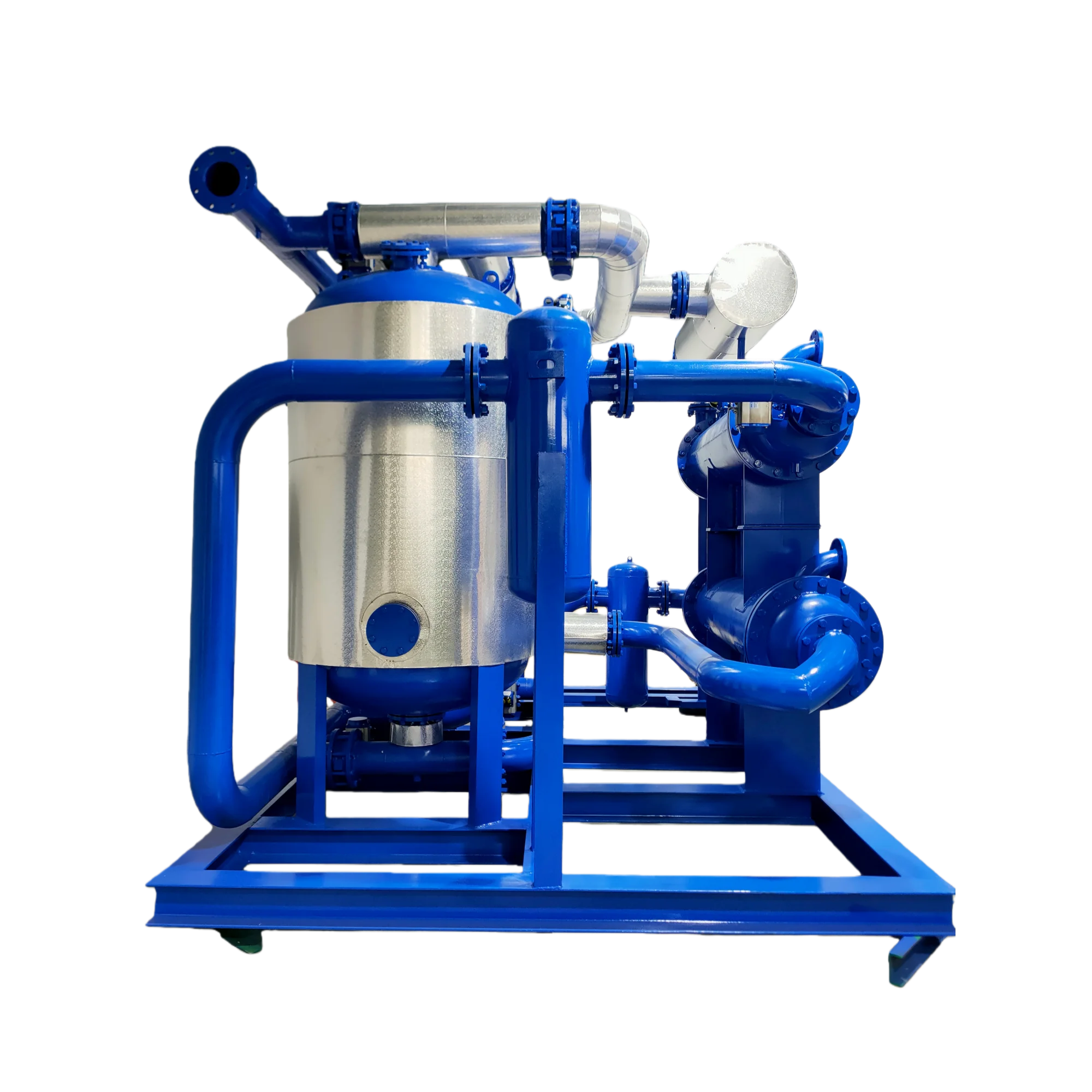
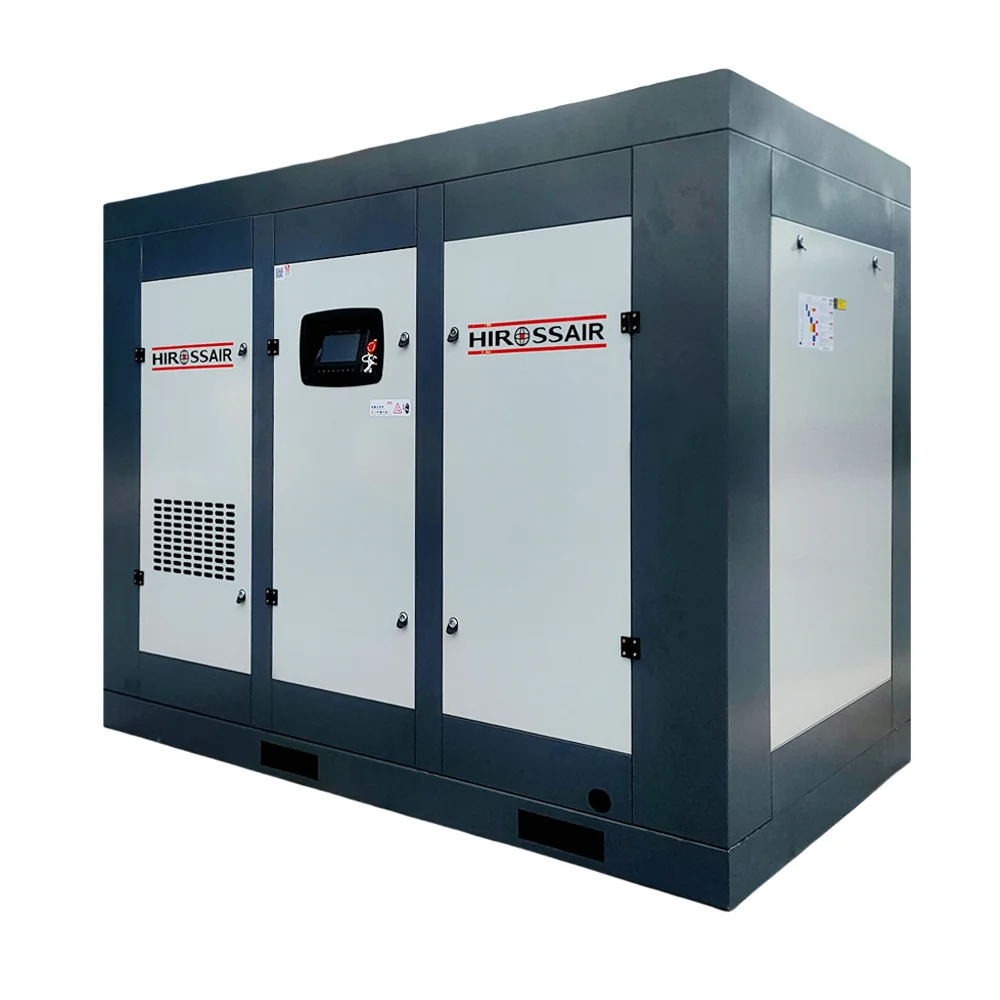
Meta Description: The world‘s largest automotive glass manufacturer, Fuyao Glass, deployed four 170 m³/min heat-of-compression adsorption dryers at its Fuqing Base, achieving stable -40°C dew point, zero purge loss, modular redundancy, annual electricity savings exceeding 3 million kWh, and a payback period of approximately 2 years.
Client Background
Fuyao Glass Industry Group Co., Ltd. is the world’s largest and most technologically advanced automotive glass solution provider. This upgrade project is located at Fuyao Glass‘s Fuqing Rongqiao Economic and Technological Development Zone, Yangxia Street, Fujian Province. This base is Fuyao’s global export base project, covering an area of 627 mu (approximately 41.8 hectares), positioned to become a world-class zero-carbon smart factory.
Fuyao Glass is in a critical period of capacity expansion, placing unprecedented demands on the reliability, energy efficiency, and scalability of its compressed air system.The base‘s total compressed air demand is approximately 550–600 m³/min (about 33,000–36,000 m³/h) , operating 24/7 to serve the entire float glass production line and multiple high-end automotive glass deep-processing lines.
Compressed Air Applications in Automotive Glass Manufacturing
(Content unchanged – same as previous version)
Pain Points
The base’s original compressed air drying system consisted of a combination of large refrigerated dryers and heated purge adsorption dryers (micro-heat type) . As production capacity rapidly expanded and process quality standards increased, the original system exhibited multiple structural problems:
-
Condensate Drain Risk of Refrigerated Dryers: Float glass and coated glass production lines have extremely low tolerance for moisture. Refrigerated dryers condense and remove water by cooling, relying on automatic drain valves to discharge condensate. However, the condensate drain valve is the highest-failure-rate component in any refrigerated dryer system – whether float-type, timer-based, or electronic, all are prone to sticking, clogging, or electrical failure during long-term continuous operation. Once a drain valve fails, condensate will flow directly into downstream pipes and equipment. For glass manufacturing, liquid water entering an adsorption tower will rapidly destroy the desiccant. More seriously, moisture entering the coating chamber or PVB assembly area will cause entire batches to be rejected, with a single loss potentially reaching millions of RMB. In Fuyao‘s large-scale continuous production, any condensate drain failure represents an unacceptable quality risk.
-
Significant Purge Loss from Heated Purge Dryers: The heated purge dryers still consume 5–8% of their rated flow as regeneration purge air. For a total system capacity of approximately 550–600 m³/min, this means about 28–48 m³/min of dry compressed air is continuously vented to atmosphere – equivalent to running an extra large compressor continuously.
-
Dew Point Instability: During hot, humid summer conditions, the regeneration efficiency of heated purge dryers decreases. The pressure dew point fluctuates, sometimes rising above -30°C, making it difficult to consistently maintain the -40°C design target for high-end products.
-
Equipment Dispersion and Heavy Maintenance Burden: Multiple units scattered throughout the utility room resulted in low space utilization and high maintenance workload. Pneumatic valves required repair or replacement every 12–18 months, and desiccant attrition accelerated.
-
Inability to Meet Capacity Expansion Needs: The original drying system was already near its capacity limit and could not support future expansion.
-
Misalignment with Zero-Carbon Smart Factory Goals: The Fuqing Base is positioned as a world-class zero-carbon smart factory. The original drying system‘s high energy consumption and high purge loss were significantly misaligned with this strategic goal.
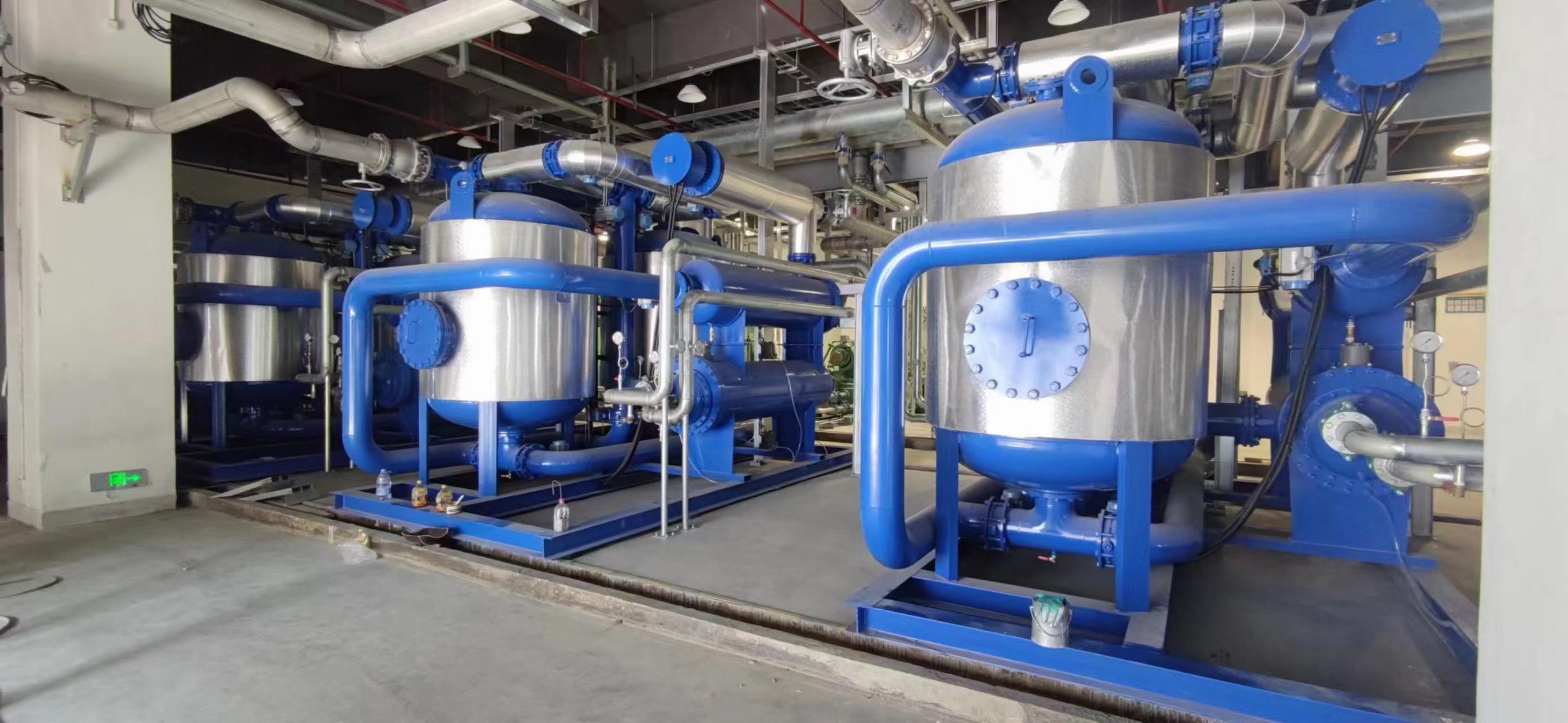
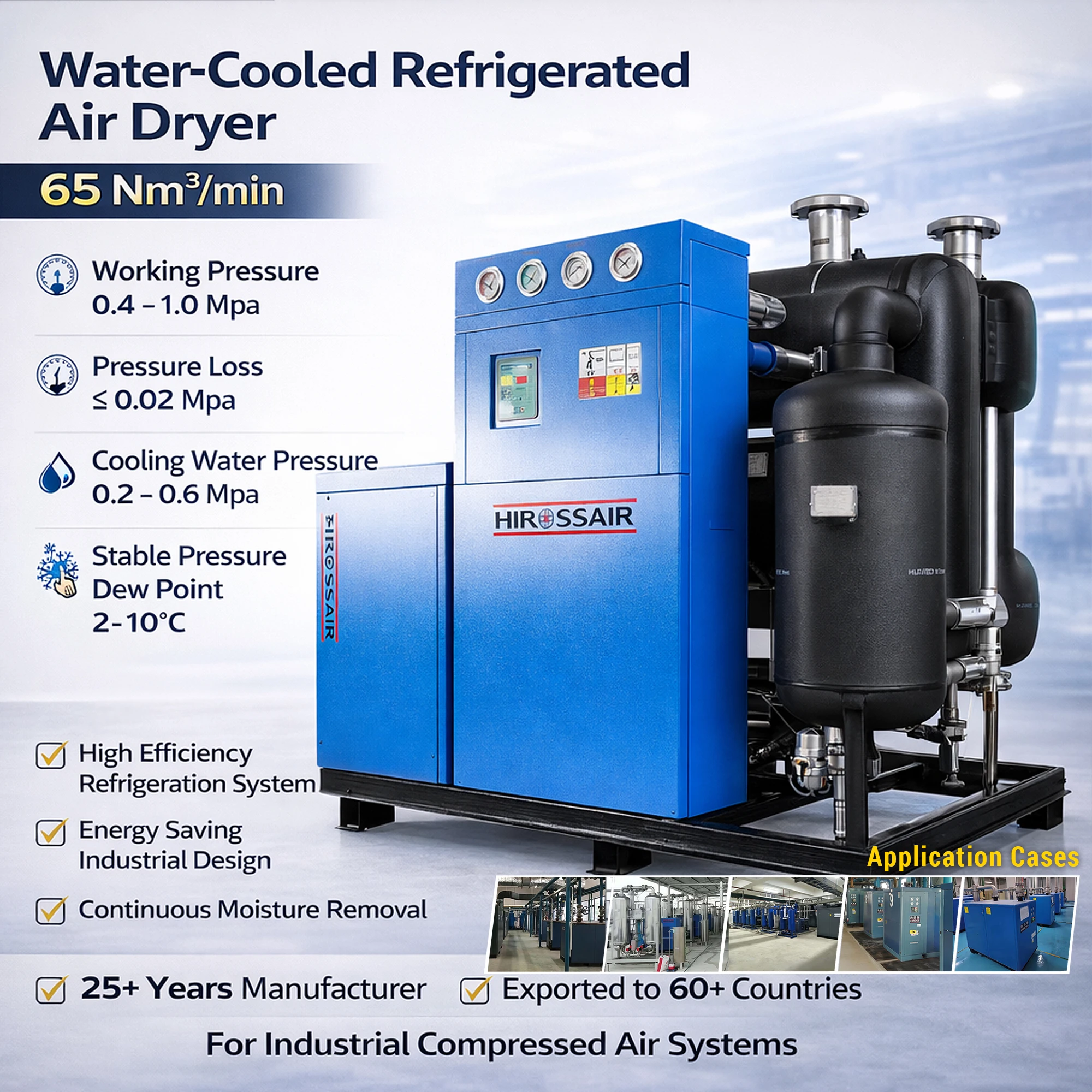
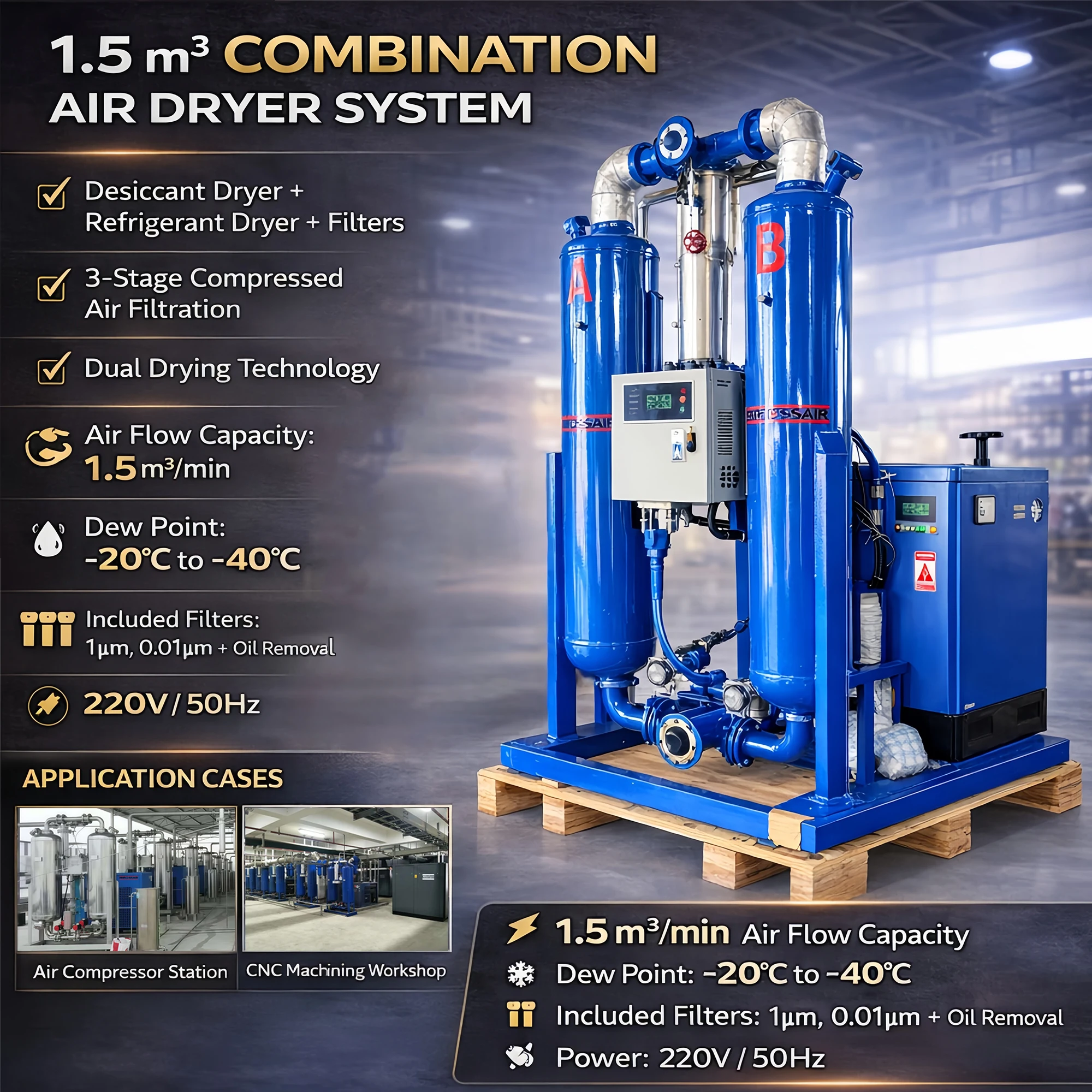
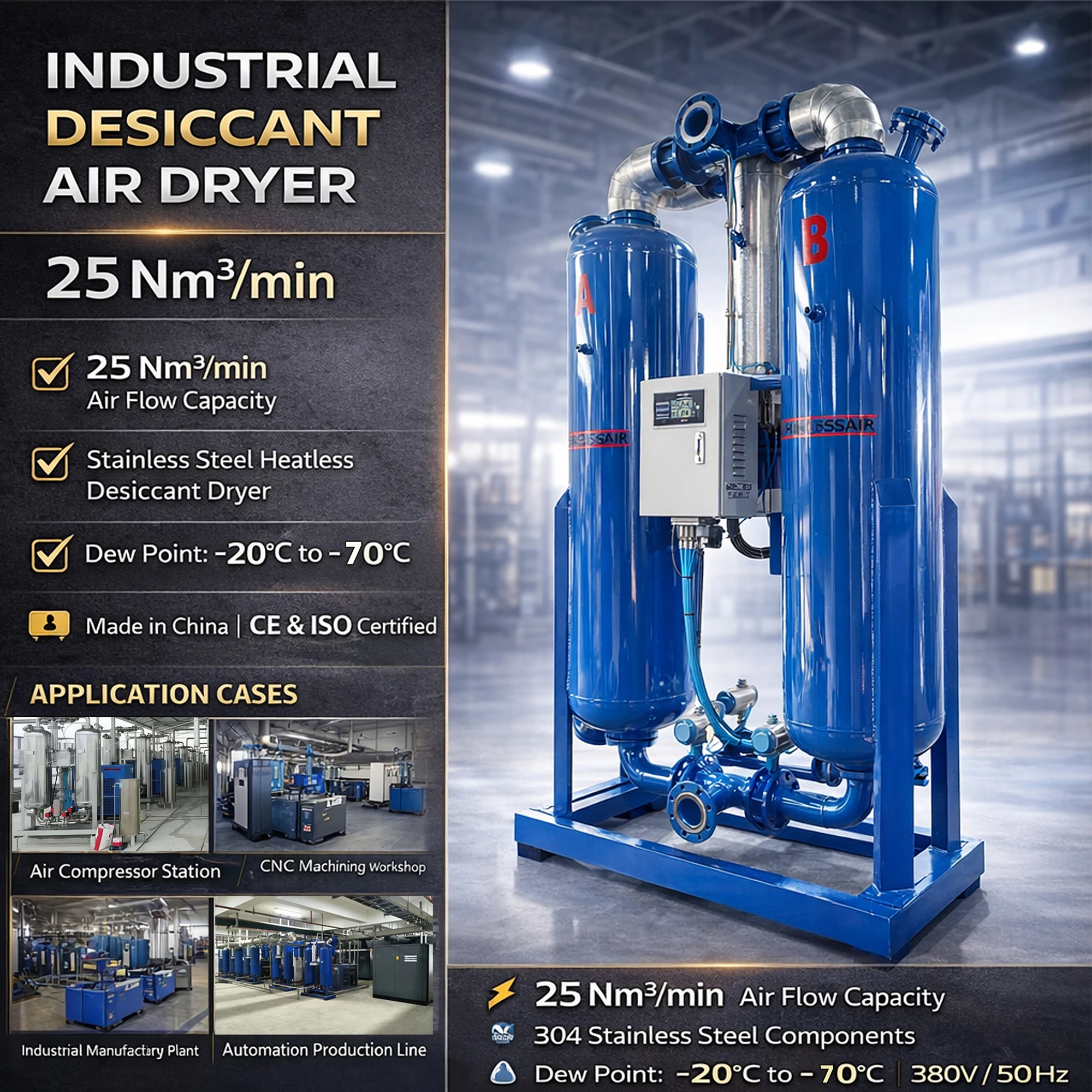
Figure: 170Nm³/min Heat-of-Compression Desiccant Air Dryer
Our Solution
Addressing Fuyao Glass’s core requirements of very large capacity, zero liquid water risk, zero purge loss, high energy efficiency, low maintenance, and modular redundancy, and considering that the Fuqing Base has multiple large oil-free centrifugal compressors operating 24/7, we designed a modular heat-of-compression (HOC) adsorption dryer system consisting of four HOC dryers operating in parallel, providing N+1 (or even N+2) redundancy.
Core Technology: Heat of Compression (HOC)
HOC technology uses the heat of compression from upstream oil-free centrifugal compressors (discharge temperature typically 120–160°C) to regenerate the desiccant, consuming no additional electrical heating energy and no compressed air for purging.
Why HOC instead of blower purge? For Fuyao Fuqing Base – a very large-scale application with multiple oil-free centrifugal compressors running 24/7 at full load – HOC offers unparalleled advantages:
|
Aspect
|
Blower Purge Dryer
|
Heat-of-Compression (HOC) Dryer
|
|
Regeneration energy source
|
Electric heater (consumes electricity)
|
Waste compression heat (free)
|
|
Regeneration power consumption
|
High (hundreds of kW)
|
Near-zero (control only)
|
|
Total energy consumption
|
High
|
Lowest in industry
|
|
Applicable scenario
|
Small to medium flow
|
Large flow, adequate discharge temperature
|
|
Carbon footprint
|
Higher
|
Very low, aligns with zero-carbon goals
|
The oil-free centrifugal compressors at the Fuqing Base have stable discharge temperatures between 120–150°C, fully meeting the heat source requirements for HOC regeneration.
Key Equipment
-
Dryers: Four HOC-Dry 170 heat-of-compression adsorption dryers, each with capacity 170 m³/min (10,200 m³/h) . Installed in parallel, they can be flexibly configured as three operating + one standby (total capacity 510 m³/min) or four operating (total capacity 680 m³/min), meeting current and future expansion needs.
-
Regeneration Method: A small stream of hot compressed air (temperature approximately 120–150°C) is taken from the centrifugal compressor discharge before the aftercooler and directed to the tower requiring regeneration. The heat desorbs moisture from the desiccant, and the humid air is discharged to atmosphere. The entire regeneration process consumes no compressed air as purge and no electrical heating energy – the regeneration energy comes entirely from waste heat that would otherwise be dissipated.
-
Zero Liquid Water Risk Design: HOC dryers operate on the principle of adsorption rather than condensation – no liquid condensate is produced during the drying process, so there is no risk of liquid water carryover due to condensate drain valve failure. Additionally, the HOC system is equipped with a high-efficiency inlet separator to intercept any accidental liquid water from upstream piping.
-
Control System: A Siemens S7-1500 PLC master controller coordinates the four dryers, balancing runtime based on online dew point monitoring and automatically removing any faulty unit with an alarm. A 15-inch industrial touchscreen HMI displays real-time operating parameters and historical trends. The system integrates into Fuyao‘s central DCS for remote monitoring and alert management.
-
Filtration Package: Pre-filter (1 µm) removes pipeline particles; after-filter (0.01 µm) captures possible desiccant fines; a high-efficiency inlet separator ensures any accidental liquid water is intercepted before reaching the adsorption towers.
Performance Specifications
|
Parameter
|
Value
|
|
Capacity per dryer
|
170 m³/min (10,200 m³/h)
|
|
Total system capacity
|
510 m³/min (3+1) or 680 m³/min (4 operating)
|
|
Pressure dew point
|
≤ -40°C (stable year-round)
|
|
Regeneration method
|
Heat of compression (using waste heat)
|
|
Regeneration electrical power
|
0 kW (no additional electricity)
|
|
Compressed air purge loss
|
0%
|
|
Liquid water generation
|
None (adsorption principle)
|
|
Output air quality
|
ISO 8573-1 Class 1 (oil), Class 2 (water)
|
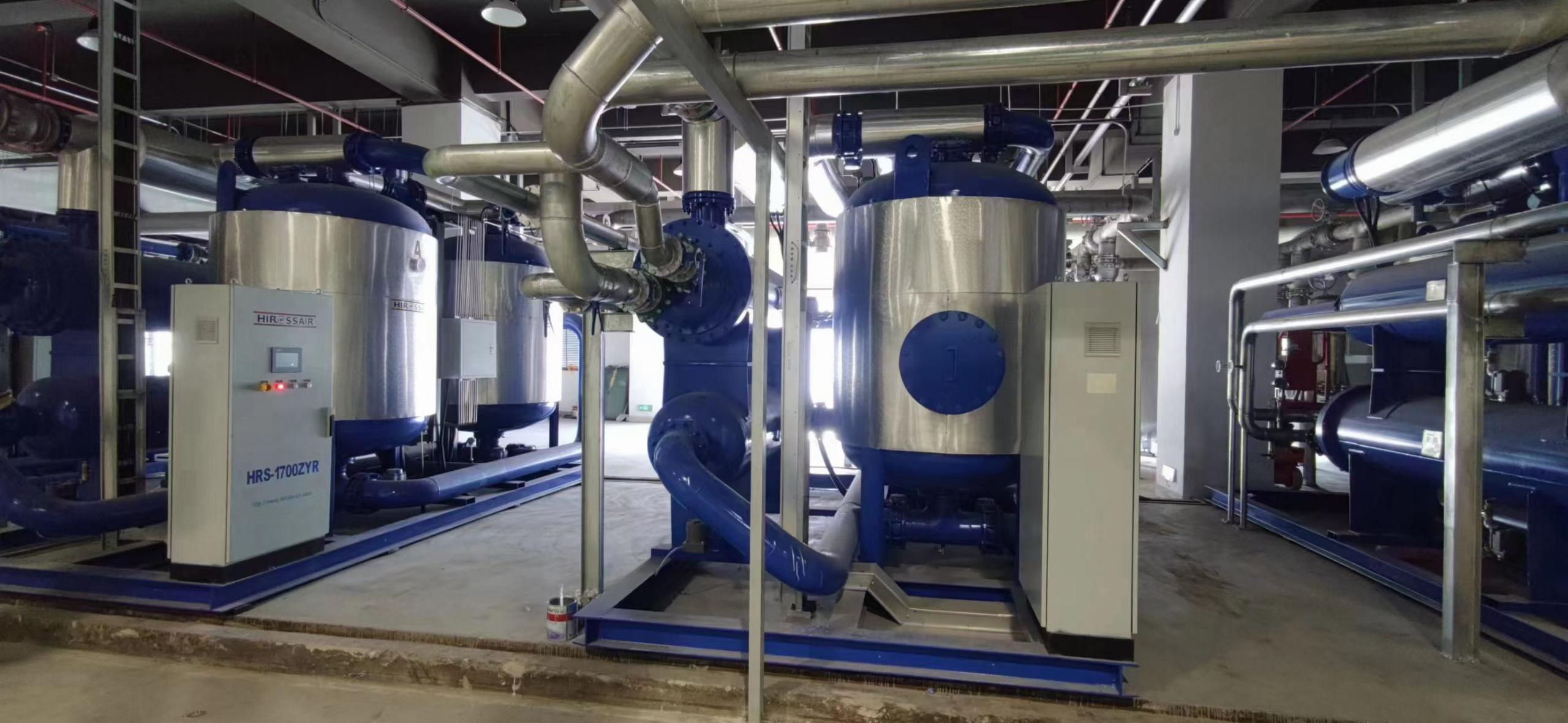
Figure: 170Nm³/min Heat-of-Compression Desiccant Air Dryers
Delivery & Installation
The project was executed using planned maintenance shutdown windows at the Fuqing Base:
-
Design & Factory Acceptance Test (6 weeks): Detailed system design, material selection, PLC control logic development. Completed full FAT testing of all four HOC dryers at the manufacturing facility, simulating actual compressor discharge conditions.
-
Delivery & Site Preparation (2 weeks): Four large skid-mounted dryers (each weighing approximately 18 tons) delivered to the Fuqing Base. Removed old drying equipment, prepared foundations, and reserved piping interfaces.
-
Installation (3 weeks): Positioned the four dryers on compact skids. Total footprint approximately 40 m² (30% less than the original system). Reconfigured compressed air headers to connect the base’s high-pressure air supply to each dryer inlet. Modified the compressor hot gas bypass piping to introduce regeneration heat. Completed power and control cable installation.
-
Commissioning & Validation (1 week): System flushed, leak-tested, dew point sensors calibrated. Continuous operation for 72 hours showed stable dew point between -42°C and -44°C. Provided operator training on the control system and delivered complete technical documentation and IQ/OQ validation documents.
No unplanned downtime occurred; all work was completed within the scheduled maintenance windows.
Results & Benefits (12 months after commissioning)
|
Metric
|
Before (Refrigerated + Heated Purge Dryers)
|
After (Four HOC Dryers, 3+1)
|
Improvement
|
|
Total system capacity
|
~550–600 m³/min
|
510 m³/min (3+1) expandable to 680 m³/min
|
Meets current demand with room for growth
|
|
Pressure dew point (summer)
|
-30°C to -38°C (fluctuating)
|
-42°C to -44°C (stable)
|
Stable, meets spec
|
|
Regeneration power consumption
|
~80–100 kW (heated purge heaters)
|
~3 kW (total controls for four dryers)
|
↓ ~97%
|
|
Compressed air purge loss
|
~28–48 m³/min (5–8%)
|
0 m³/min
|
100% eliminated
|
|
Compressor energy equivalent to purge loss
|
~170–290 kW
|
0 kW
|
Saving ~170–290 kW
|
|
Total equivalent drying system power
|
~250–390 kW
|
~3 kW
|
↓ ~99%
|
|
Annual electricity savings
|
Baseline
|
≈ 3,040,000 kWh/year
|
Equivalent to ~1,670 tons CO₂ reduction
|
|
Annual electricity cost savings
|
Baseline
|
≈ ¥2,170,000/year
|
—
|
|
Annual maintenance cost
|
≈ ¥400,000/year
|
≈ ¥70,000/year
|
↓ ~82%
|
|
Liquid water risk
|
Present (refrigerator drain failure)
|
None (adsorption principle)
|
Risk completely eliminated
|
Purge loss of 28–48 m³/min requires additional compressor power. Oil-free centrifugal compressor specific power is approximately 6 kW/m³/min → saving 170–290 kW of compressor power.
Calculated based on 24/7/365 operation. Original system equivalent power 350 kW (mid-range), new system 3 kW. Annual savings ≈ (350-3) kW × 8,760 h ≈ 3,040,000 kWh. At industrial electricity rate ¥0.70/kWh, annual electricity cost savings ≈ ¥2.13 million. Including maintenance savings, total annual benefit ≈ ¥2.46 million.
Quantifiable Benefits
-
Remarkable Energy Savings: HOC technology achieves near-zero electricity consumption for the drying process – total controls for four dryers consume only about 3 kW. Compared to the original heated purge dryers, regeneration energy consumption dropped by approximately 97%. Eliminating purge loss means the compressors no longer need to produce extra air to compensate. Annual electricity savings exceed 3 million kWh, equivalent to reducing CO₂ emissions by approximately 1,670 tons/year (based on China grid emission factor of 0.55 kg CO₂/kWh). This strongly aligns with Fuyao Group‘s ESG carbon neutrality goals.
-
Liquid Water Risk Completely Eliminated: HOC dryers operate on the adsorption principle – no liquid condensate is produced during the drying process, fundamentally eliminating the catastrophic risk of liquid water carryover due to condensate drain valve failure.
-
Year-Round Stable Dew Point: Online monitoring shows pressure dew point consistently between -42°C and -44°C throughout the year, never exceeding -40°C even under hot, humid summer conditions. No moisture-related defects have been reported from coated glass or laminated glass lines.
-
Modular Redundancy & Future Expansion: With four dryers configured as three operating + one standby, any single unit can be taken offline for maintenance without affecting production – the remaining three still deliver 510 m³/min, fully covering the base‘s peak demand of 550–600 m³/min. When future capacity expansion requires more flow, the standby unit can be brought online to achieve four-operating mode (680 m³/min) without purchasing additional equipment.
-
Drastically Reduced Maintenance: HOC dryers have long cycle times (6–8 hours), resulting in very low valve actuation frequency. No electric heater consumption, no high-frequency switching valves, no desiccant oil-poisoning risk. Desiccant life is expected to extend to more than 5 years.
-
Return on Investment: Total installed cost ≈ ¥5.2 million (four dryers and accessories). Annual electricity savings ≈ ¥2.13 million, maintenance savings ≈ ¥0.33 million, total annual benefit ≈ ¥2.46 million. Payback period ≈ 2.1 years.
-
Supporting Zero-Carbon Smart Factory Construction: The HOC dryer‘s use of waste heat for regeneration – consuming no additional electricity – minimizes the carbon footprint of the drying process, providing strong support for Fuyao’s zero-carbon smart factory initiative.
Customer Testimonial
“Our original drying system at the Fuqing Base suffered from multiple issues: condensate drain failure risk in refrigerated dryers, high purge loss, unstable dew point, and misalignment with our zero-carbon goals. The new four-unit HOC dryer system with 3+1 modular redundancy fundamentally addresses all these pain points – no liquid water, no purge loss, near-zero electricity consumption, and stable year-round dew point below -40°C. Annual electricity savings exceed 3 million kWh, with a payback period of approximately two years. This solution has become a benchmark for compressed air drying technology upgrades across Fuyao Group.”
— Utility Manager, Fuyao Glass Fuqing Base
 EN
EN