All Categories

Get a Free Quote

Our representative will contact you soon.
Email
Mobile
Name
Company Name
Message
0/1000
Back

Battery Gigafactory – Upgrading from Heated Purge to Stainless Steel Blower Purge Dryers

Meta Description: How CATL replaced four energy-intensive heated purge dryers with four 85 m³/min stainless steel blower purge dryers, achieving -40°C dew point, zero compressed air purge loss, and 40% energy reduction.

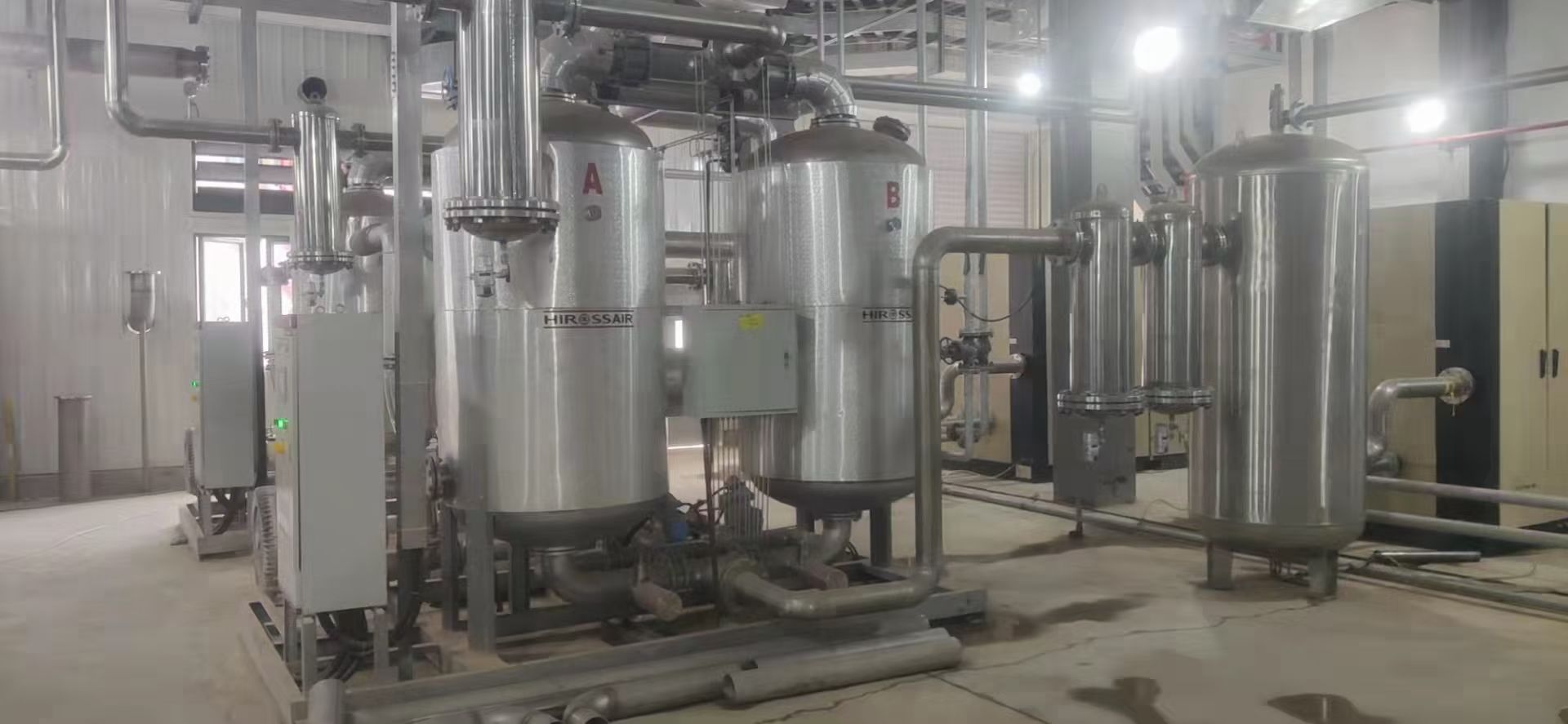
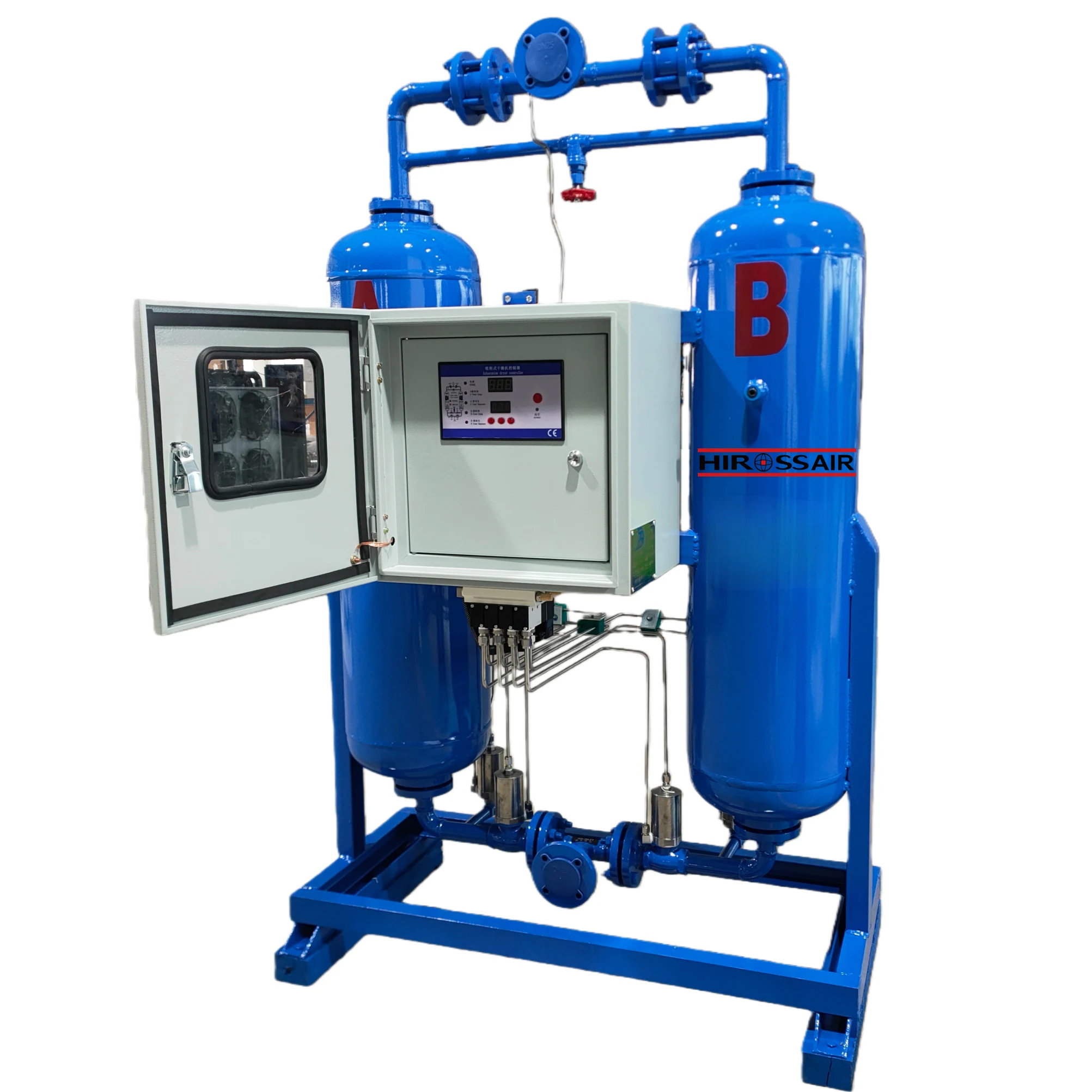
 Stainless Steel Zero Purge Blower Desiccant Air Dryers.jpg

Figure: 85 Nm³/min Stainless Steel Zero Purge Blower Desiccant Air Dryers


Client Background

Contemporary Amperex Technology Co., Limited (CATL) , the world’s largest EV battery manufacturer, operates a high-output gigafactory producing lithium-ion cells. The plant’s compressed air system has a total capacity of 340 m³/min (20,400 m³/h) , supporting:

  • Electrode coating dry rooms (dew point ≤ -40°C mandatory)
  • High-speed assembly line pneumatics
  • Cleanroom purge and instrument air

Battery manufacturing strictly avoids refrigerated dryers due to the risk of liquid water carryover from failed condensate drains. The plant had originally installed four heated purge (micro-heat) adsorption dryers, each rated at 85 m³/min – a common choice before high-efficiency blower purge technology became cost-effective.


Pain Points

The existing heated purge dryers (also known as micro-heat or externally heated adsorption dryers) caused several operational and financial issues:

  • Significant Purge Air Loss: Heated purge dryers still consume 5–8% of the rated flow for regeneration – even with electric heaters. For four 85 m³/min units operating in parallel (total flow ~300–340 m³/min), this meant ~20 m³/min of dry compressed air constantly vented to atmosphere.
  • High Electrical Consumption: Each dryer required electric heaters (typically 15–25 kW) during the regeneration phase, adding to the energy bill.
  • Dew Point Instability Under Peak Load: During summer, high inlet temperatures and humidity challenged the regeneration efficiency. Dew point occasionally rose above -35°C, causing concerns in dry room monitoring.
  • Valve Wear & Maintenance: The cycle frequency (typically 60–120 minutes) caused pneumatic valves to wear every 12–18 months. Desiccant attrition from frequent pressure swings generated dust, clogging downstream filters.
  • Carbon Steel Construction Risk: The original dryers had carbon steel towers and piping. Over time, internal rust particles formed, risking contamination of the dry room environment – unacceptable for battery production.

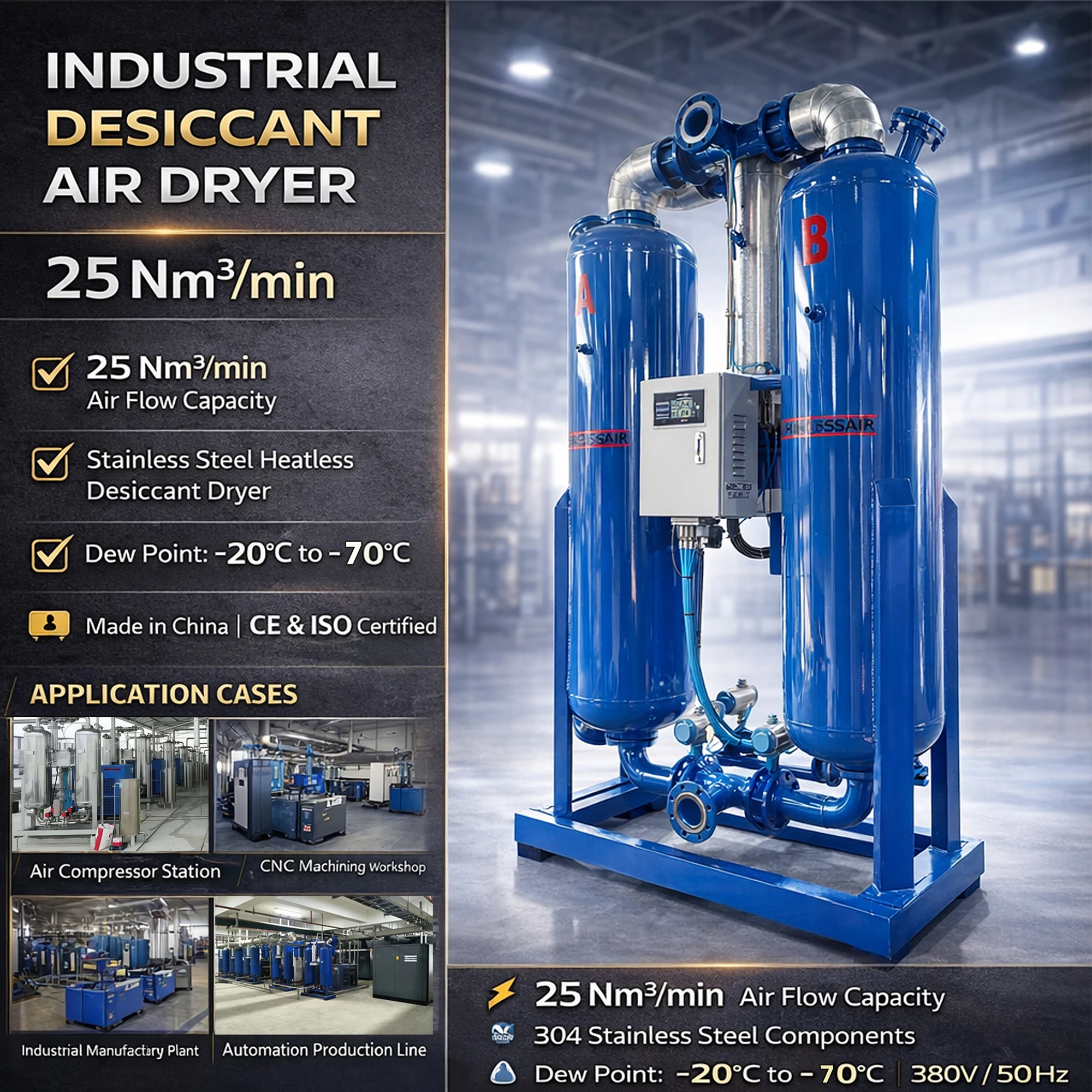
 Stainless Steel Zero Purge Blower Desiccant Air Dryer.jpg

Figure: 85 Nm³/min Stainless Steel Zero Purge Blower Desiccant Air Dryer

CATL needed a zero-purge, ultra-reliable drying solution with stainless steel wetted parts to eliminate corrosion risks, and the ability to scale for future production lines.


Why Not Heat-of-Compression (HOC)?

While HOC dryers offer zero purge and zero electrical heating, they require the upstream compressor’s discharge temperature to be consistently above 120°C. CATL’s existing oil-free screw compressors, though modern, operate at variable loads and sometimes discharge below 100°C during low demand. HOC would require additional heat input or bypass control, adding complexity. The client preferred a proven, standalone blower purge design that works independently of compressor load variations.


Our Solution

We proposed replacing the four existing heated purge dryers with four new stainless steel blower purge adsorption dryers – each rated 85 m³/min (5100 m³/h) , configured in parallel (three operating, one standby). The system uses heated ambient air for regeneration with zero compressed air purge loss.

Key Equipment

  • Dryers: Four BlowerDry-HRB-850GRD adsorption dryers, each 85 m³/min capacity. All air-contacting components (towers, piping, valves) are 304 stainless steel – eliminating rust and ensuring pharmaceutical/battery-grade cleanliness.
  • Regeneration Method: A high-efficiency blower draws ambient air, passes it through an electric heater (raising temperature to 150–200°C), and purges the off-line tower. The moisture-laden air is vented. No compressed air from the plant network is used – zero purge loss. Cooling is done with unheated ambient air via the same blower.
  • Control System: A master PLC (Siemens S7-1500) coordinates the four dryers, balancing runtime and automatically switching the standby unit when a running dryer reaches its service interval. Online dew point monitoring (≤ -40°C) and remote alarms integrated into CATL’s DCS.
  • Filtration: Pre-filters (1 µm) remove pipe scale; after-filters (0.01 µm) capture desiccant fines. No oil filters needed (upstream oil-free compressors).

Performance Specifications

Parameter

Old Heated Purge Dryer

New Blower Purge Dryer

Capacity per dryer

85 m³/min

85 m³/min

Purge air loss

5–8% (~5 m³/min per dryer)

0%

Regeneration electric heater power

15–25 kW per cycle

25–30 kW (but runs only 2–3 hours per 8-hour cycle)

Blower power

None

6–8 kW per dryer (continuous during regen)

Pressure dew point

-35°C to -40°C (unstable in summer)

≤ -40°C guaranteed (tested to -45°C)

Cycle time

60–120 minutes

6–8 hours

Wetted material

Carbon steel (rust risk)

304 stainless steel


Air Compression System Connection Diagram.jpg 

Figure: Air Compression System Connection Diagram

Delivery & Installation

The project was executed over a planned 3-week shutdown:

  • Design & FAT (5 weeks): Engineering approval, stainless steel material certificates, and factory acceptance testing of all four dryers.
  • Delivery (2 weeks after FAT): Delivered to gigafactory.
  • Installation (3 weeks): 
    • Removed four old heated purge dryers.
    • Installed new stainless steel blower dryers on compact skids.
    • Reconfigured piping headers for 3-operating + 1-standby configuration.
    • Upgraded electrical supply for blowers and heaters.
    • Connected to DCS.
  • Commissioning (1 week): Leak tests, dew point calibration, and operator training.

No unplanned downtime occurred.


Results & Benefits (12 months after commissioning)

Metric

Before (Heated Purge Dryers)

After (Blower Purge Dryers)

Improvement

Pressure dew point (summer)

-33°C to -38°C

-42°C to -44°C

Stable ≤ -40°C

Purge air loss (total)

~20 m³/min (5–8%)

0 m³/min

100% eliminated

Compressor energy equivalent to purge loss*

~120 kW

0 kW

Saved ~120 kW

Electric heater energy

~40 kW (average over time)

~15 kW (blower + heater, optimized duty cycle)

↓ 62%

Total electrical saving (vs. old system)

Baseline

≈ ¥520,000/year

~40% reduction

Maintenance cost

¥220,000/year (valves, desiccant, filter)

¥50,000/year

↓ 77%

Desiccant life

18–24 months

>5 years (estimated)

↑ 2–3x

Internal rust/particles

Detected in downstream filters

None (stainless steel)

Quality improved

*Purge loss requires an additional 20 m³/min of compressed air production. Typical specific power for oil-free screw compressors is 6 kW per m³/min → 120 kW of continuous compressor power saved.

Quantifiable Benefits

  • Energy Savings: Eliminating purge loss saved ~120 kW of compressor power. Reduced heater and blower power further contributed. Total annual electricity saving: ≈¥520,000 (based on ¥0.70/kWh, 24/7/365).
  • Production Reliability: Dew point has never exceeded -40°C. The dry room humidity control became more stable, and zero moisture-related coating defects were reported.
  • Contamination Elimination: Stainless steel towers and piping removed the risk of rust particles. Downstream filters now show no iron oxide contamination – critical for battery cleanliness.
  • Maintenance Reduction: No more high-cycle purge valves (the old dryers had valves cycling every 1–2 hours). Blower purge dryers use only two main valves per tower with 6–8 hour cycles. Desiccant attrition virtually stopped.
  • Redundancy & Scalability: With four units (3+1), CATL can perform maintenance on any dryer without interrupting production. The spare capacity also accommodates future line expansions.
  • ROI: Total installed cost ≈ ¥2,400,000. Annual savings (energy + maintenance) ≈ ¥520,000 + ¥170,000 = ¥690,000. Payback period ≈ 3.5 years. CATL has standardized this design for other plants.

Customer Testimonial

“Our old heated purge dryers were wasting 8% of our compressed air and couldn’t hold -40°C reliably. The new stainless steel blower purge dryers give us rock-solid dew point, zero purge loss, and no rust contamination. The energy savings alone justified the upgrade.”
Senior Utility Manager, CATL Gigafactory

Prev

Automotive Glass Manufacturing Base – Modular HOC Dryer System Delivers Over 3 Million kWh Annual Savings

ALL

Top Metal Mining Group – Water-Cooled Zero-Purge Blower Purge Dryer Delivers 7 Years of Stable Operation

Next
Recommended Products

Get a Free Quote

Our representative will contact you soon.
Email
Mobile
Name
Company Name
Message
0/1000